Middletown, VA
Rigging Servicesin Middletown, VA
Rigging services for plants in Middletown, VA and across the Shenandoah Valley. We move, set, level, and anchor industrial equipment inside working facilities. Conveyors, compressors, air receivers, gearboxes, pressure vessels, electrical cabinets, production machines, and the odd unit that has to come through a door narrower than the machine.
Most of that work is not really a lifting problem. It is a coordination problem. The old unit has to come out, the pad has to be broken up and repoured, the frame has to be fabricated, and the new machine has to land level before anybody can tie it back in. We do all of that with one crew, so your maintenance department is not sequencing four vendors around one production window.
What this covers
Industrial rigging and machine setting
Rigging inside a live plant is not the same job as rigging on an open site. There is a ceiling, there is a column in the way, there is a floor with a load limit, and there is a production line forty feet away that is still running. The route matters as much as the pick.
We start with the load and the path. Weight, center of gravity, pick points, sling angles, floor and slab capacity, door and aisle clearances, and what has to be protected or moved before anything comes off the ground. Then we walk that route with a tape. A mezzanine gets added over an aisle, a panel box narrows a doorway to thirty eight inches, a trench drain runs right where the load chart assumed solid slab. What we verify standing in the building is what we price.
- Equipment sets, moves, and relocations inside occupied buildings
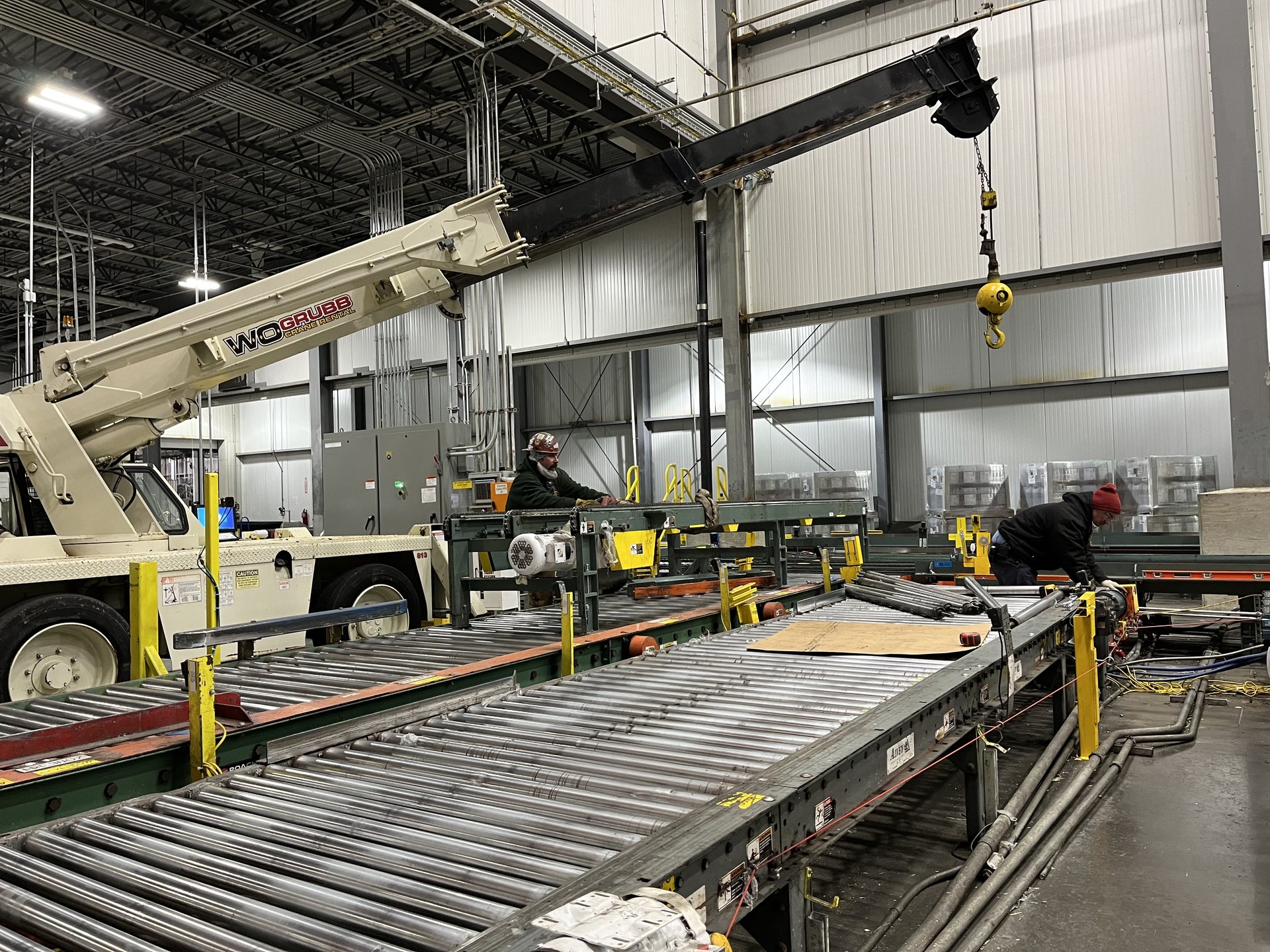
- Conveyor, drive, and gearbox installation and removal
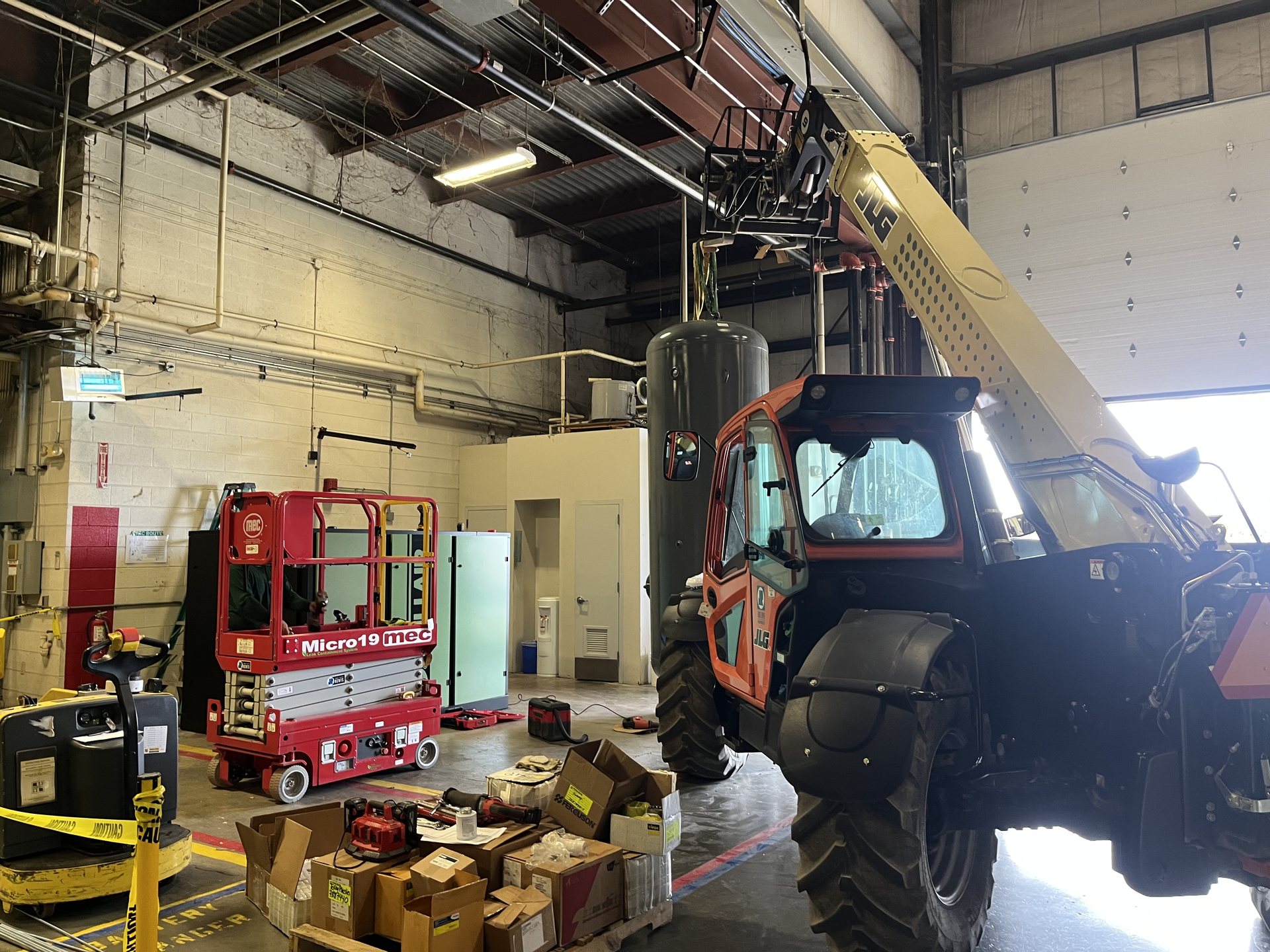
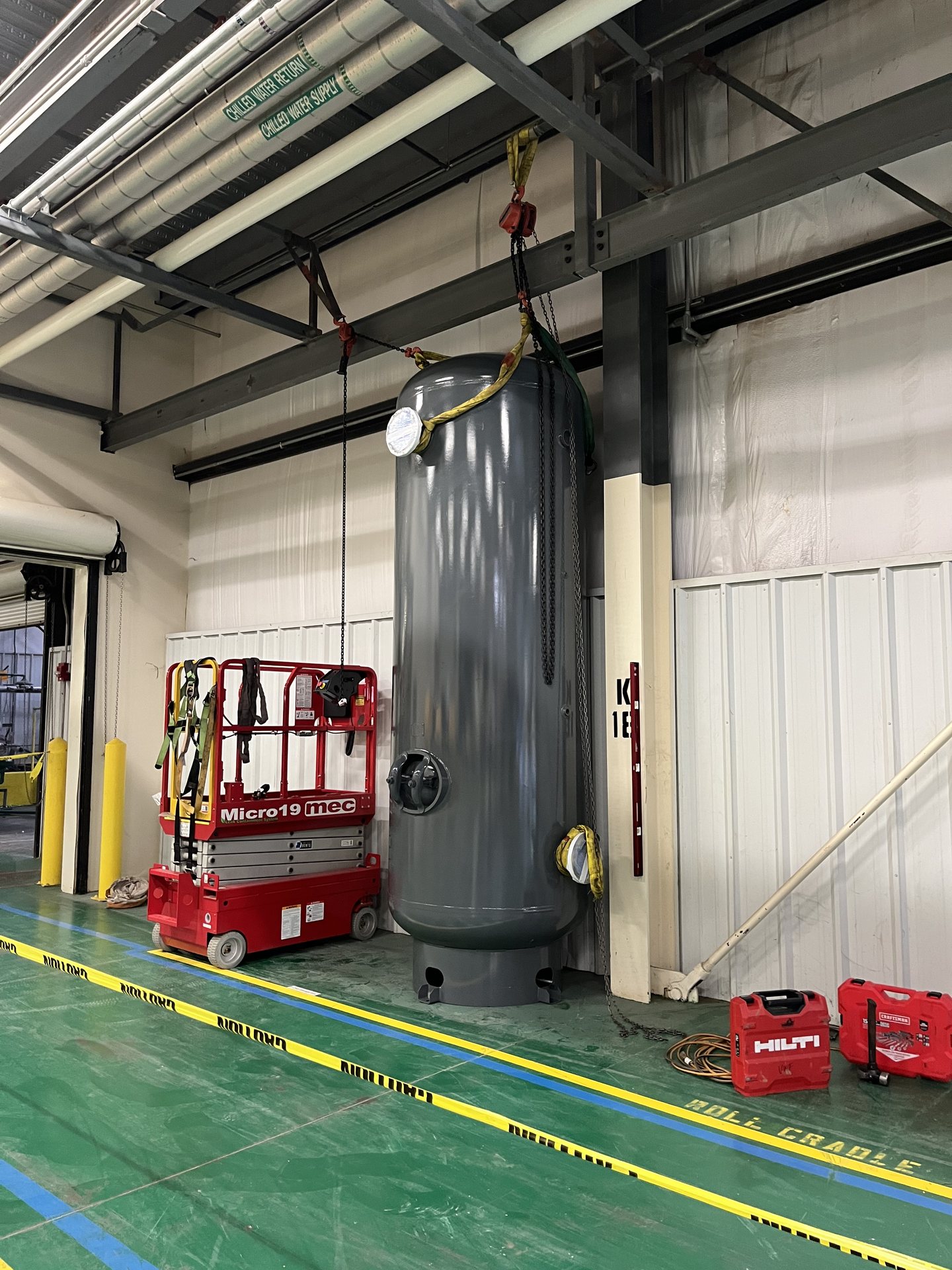
- Compressor and air receiver setting in mechanical rooms
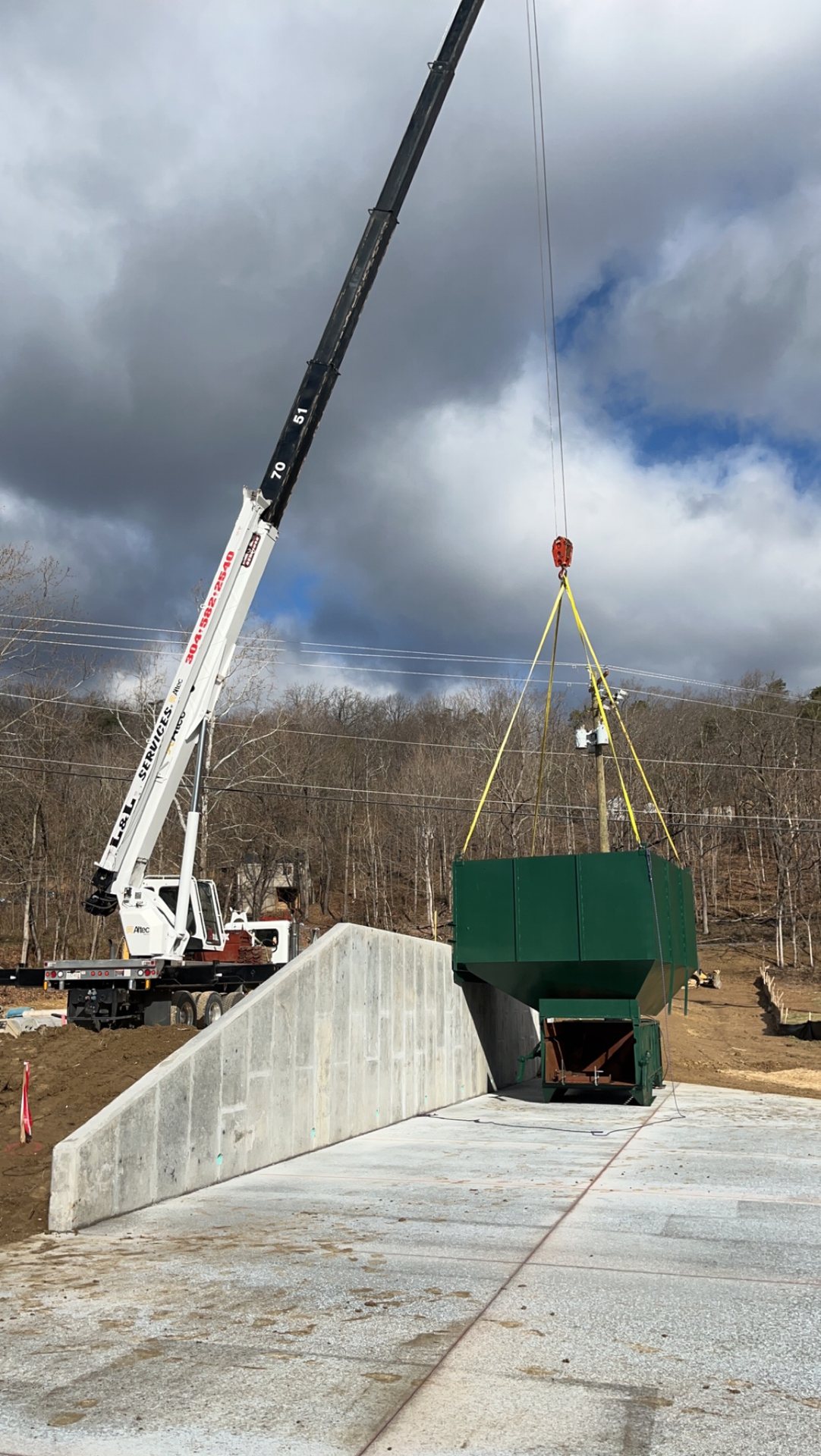
- Pressure vessel and tank rigging
- Electrical cabinet and skid moves
- Machine removal, decommissioning, and haul out
- Setting equipment on new pads and fabricated steel frames
- Load path planning, sling and hitch selection, cribbing and protection
Scope
The four jobs plants call us for
Setting and moving plant equipment
Getting the unit off the truck, through the building, and onto its foundation. Skates and rollers where a crane cannot reach, jacking and cribbing in stages where headroom is tight, forklift and telehandler work where that is the right tool.
Machine removal and decommissioning
Cutting the old unit free of its anchors, piping, and supports, then rigging it out of the building and onto a truck. The pad, the footing, and the debris that come with it run under our demolition and concrete scope on the same job.
Millwright work: leveling, shimming, anchoring
Setting a machine is the easy part. Bringing it to line, level, and elevation, shimming out soft foot so bolting it down does not distort the frame, and laying out anchors to the equipment drawing so the base bears where the manufacturer says it should.
Working around production
Energy control comes before the first sling goes on. Locked and tagged on your procedure, stored energy bled down, accumulators and springs verified at rest, and anything overhead of the route cleared with your planner. Our crews run days, Monday through Friday, 7:00 AM to 3:00 PM, and we build the sequence to fit inside that.
Why one contractor
The rig, the steel, and the pad on one purchase order
A machine swap normally takes a rigger, a fabricator, a concrete crew, and a demo crew. Each one bids its own slice off the same drawing and nobody owns the seams. When the new pad comes back out of the anchor pattern, you are the one holding a line down while four companies decide whose problem it is.
We cover all of it. The same crew that pulls the old unit out breaks up the footing, forms and pours the new pad, fabricates the base frame or the access platform, and rigs the new machine into place. Who shows up for a rigging job does not change between phases either, because the owner works the job.
See also welding and fabrication for the steel that goes under and around the equipment, mobile welding when the cutting and repair has to happen at the machine, and industrial maintenance for the repair and shutdown work that follows.
Capability
What we bring to a rigging job
- Lift planning Load weight and center of gravity, pick points, sling angle, rated capacity of every component in the assembly, load chart and radius before anything leaves the ground.
- Pick method and limits Weight, radius, headroom, and floor capacity decide the method. At the walkthrough we tell you which picks run on our own forklifts, telehandlers, jacks, and gantry gear, and which ones need a crane brought in and coordinated under our scope.
- Rigging hardware Chain, wire rope, and synthetic slings in vertical, choker, basket, and bridle hitches. Shackles, spreader bars, chain falls, come alongs, tag lines, and corner softeners so a sling does not get cut on an edge.
- Horizontal moves Machinery skates and rollers, jacking and cribbing, skidding where there is no crane access, which inside most plants is most of the time.
- Setting and alignment Line, level, and elevation. Shimming, soft foot correction, coupling and drive alignment, anchor bolt layout to the equipment drawing.
- Fabrication support Base frames, skids, sole plates, equipment stands, and access platforms built in our 5,000 square foot Middletown shop from A36 plate and A500 tube before the equipment ever arrives.
- Site protection Floor and slab protection, cribbing and mats to spread load, containment and cleanup so your people can work the next shift.
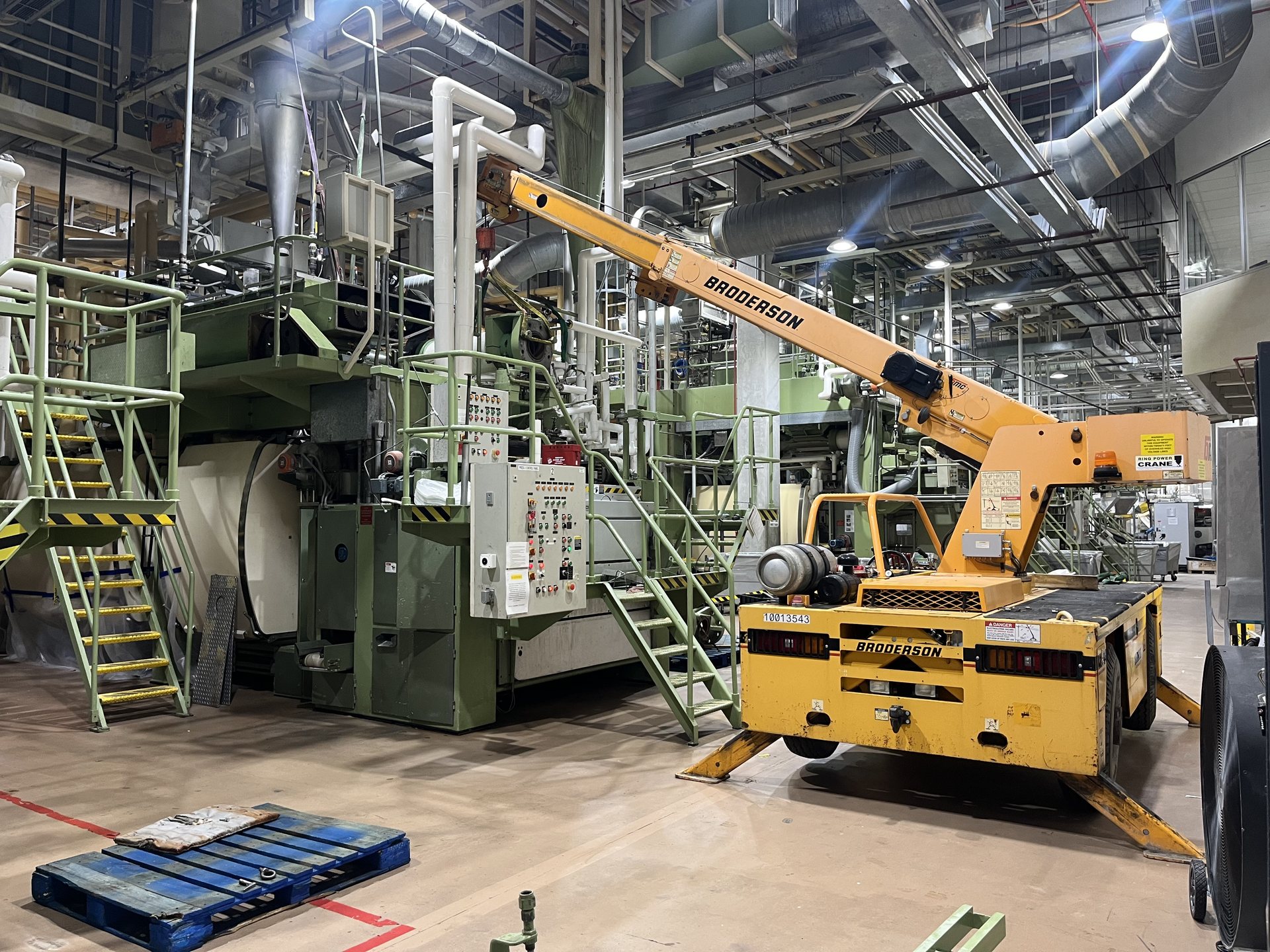
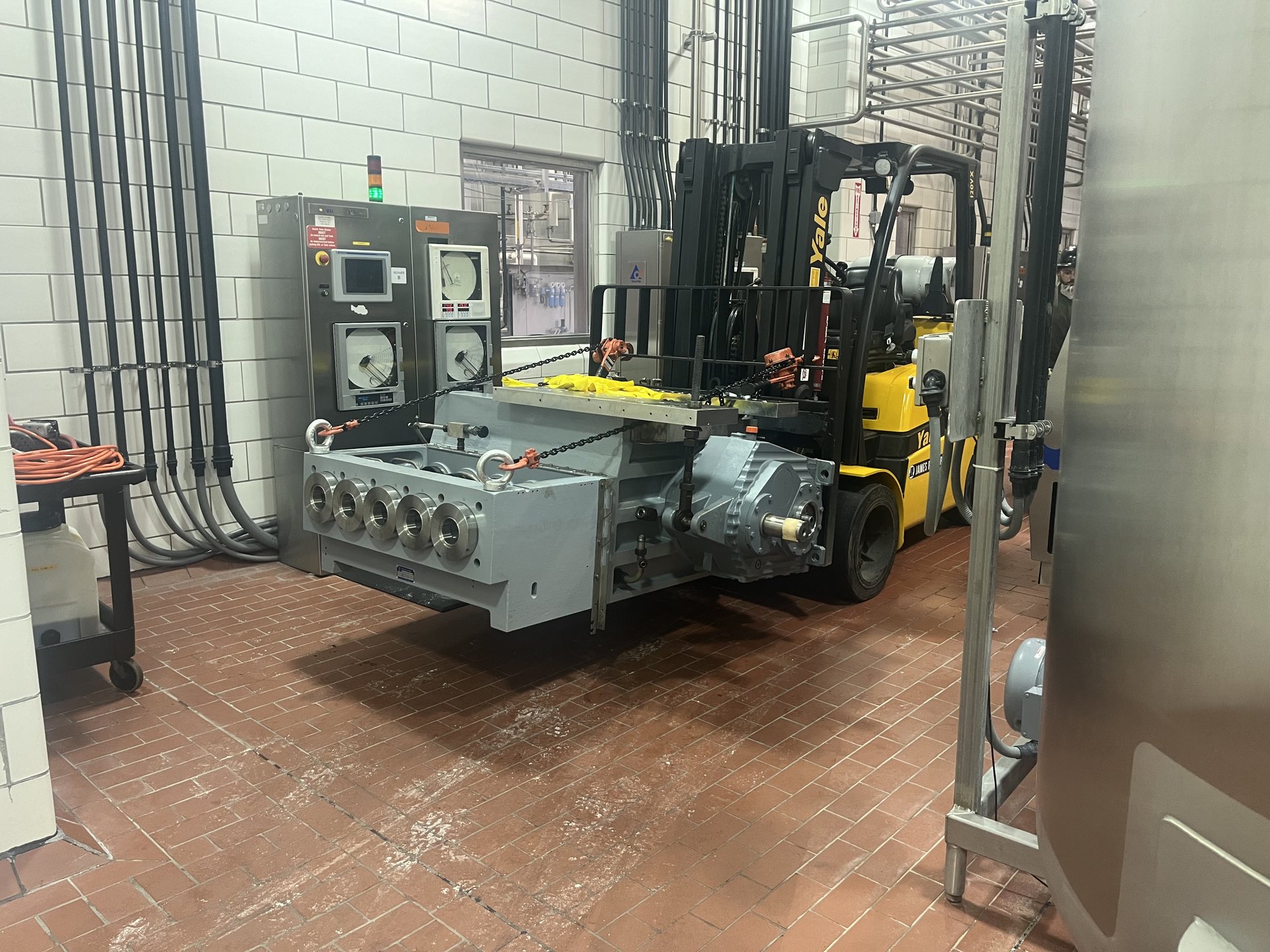
Recent rigging work
How we work
How a rigging job runs
Site walkthrough
A photo does not show floor capacity, headroom, or the column standing in the middle of the route. On anything with a load path through the building we walk it, measure the door and aisle clearances, look at the floor, and confirm where the equipment is going before it is priced.
Scope and lead time
You get a written scope covering the rig, the fabrication, the pad, the removal, and what we need from you. Long lead items get identified up front so they are not the thing that pushes the date.
Orientation and permits first
We sit through your contractor orientation and get badged ahead of the date. If the scope includes cutting, the hot work permit is pulled with your EHS group before the window opens, not on the morning of the move.
Set, level, and hand back
Machine on the pad, brought to line and level, shimmed, anchors torqued to the equipment drawing, and the area swept and cleared so your trades can start landing power and pipe.
Frequently Asked Questions
- Do you do millwright work, or only the lift?
Both. Moving the machine and setting the machine are two different jobs. We do the rig and then the millwright side of it: bringing the unit to line, level, and elevation, shimming out soft foot, aligning the drive, and anchoring it to the foundation.
- How much can you pick, and is the crane yours or brought in?
Most plant equipment moves on skates, jacks, cribbing, forklifts, and telehandlers, and that gear is ours. When the weight or the radius puts it past that, we bring a crane service in and run it under our scope so you are still dealing with one contractor. The load, the radius, the headroom, and the floor decide it, and you get that answer at the walkthrough rather than after the quote.
- Can you work while our line is running?
Often, yes, and that is usually the point. We work to your permit system and stage the job around the equipment that has to keep making product. Our crews work days, Monday through Friday, 7:00 AM to 3:00 PM, so we plan the sequence with your maintenance planner to fit inside those hours. Anything that can be built ahead gets fabricated in our shop first, so the machine lands on a frame that was already checked against the anchor drawing.
- Do you quote a rigging job from photos or a phone call?
We can scope a small move that way. For anything with a load path through the building, we walk the site first. Floor capacity, headroom, door widths, and the route are what decide the method, and none of those are visible in a photo.
- What do you need from us before you quote?
Equipment weight and dimensions, the general arrangement or anchor bolt drawing if you have it, where it is coming from and where it is going, whether the equipment will be running or down, and your target date. If you do not have the drawings, a walkthrough covers it.
- Do you handle the old machine and its foundation too?
Yes. That is selective demolition and concrete work stacked on the rigging, and we self perform all three under one scope.
Get it moving
Have a machine to move, set, or pull out?
Call and describe the unit and the room it has to go in, or send the drawing and we will schedule a walkthrough. We rig out of Middletown and travel from there, so check the service area if you are not sure whether we reach you. Monday through Friday, 7:00 AM to 3:00 PM.