Middletown, VA
Demolition Contractorin Middletown, VA
Virginia Welding & Fabrication LLC works as a demolition contractor in Middletown, VA for plants, warehouses, and data centers across the Shenandoah Valley and Northern Virginia. What we do is selective interior demolition and equipment removal inside buildings that stay standing and usually stay running. When a machine is obsolete, a line is being reconfigured, or a pad is in the wrong place for the equipment that is coming, we cut it loose, rig it out, and break out what it was sitting on.
Demolition is the front half of a plant change. It is also the half that decides whether the rest of the schedule holds, because nothing new gets set until the old scope is gone and the floor is clear. We plan the removal around your production window, work to your hot work permit and your lockout procedure, and hand the space back ready for what comes next. Call (540) 931-1331, Monday through Friday, 7:00 AM to 3:00 PM.
What this covers
Selective interior demolition inside a working facility
Selective demolition inside a running plant is a different job than demolition on an empty building. Everything that stays has to be protected. The conduit overhead is live, the line 40 feet away is producing, and the floor you are breaking out is the floor a forklift needs at 6:00 the next morning. That is the constraint we plan around first.
Most of our demolition scope arrives attached to something else. A plant is replacing a compressor, a conveyor run is being shortened, a machine is being sold off, a rack aisle is being reconfigured. The demolition is the piece nobody wants to own because it sits between trades. We take it as one scope with the rig out and the steel work that follows, so the old pad coming out and the new grouted pad going back in land on one shop instead of three vendors pointing at each other. Ryan Hartley owns Virginia Welding & Fabrication and works the jobs, so the person who quotes the removal is the person standing in it.
- Equipment disconnection, cutting loose, and rig out
- Concrete equipment pad and foundation removal
- Structural steel, mezzanine, and platform removal
- Pallet rack, guardrail, and conveyor teardown
- Duct, pipe support, and overhead steel removal
- Dust and debris containment around live production
- Floor patch back coordinated with the new install
Scope
Demolition work we take on
Cutting a machine loose and getting it out
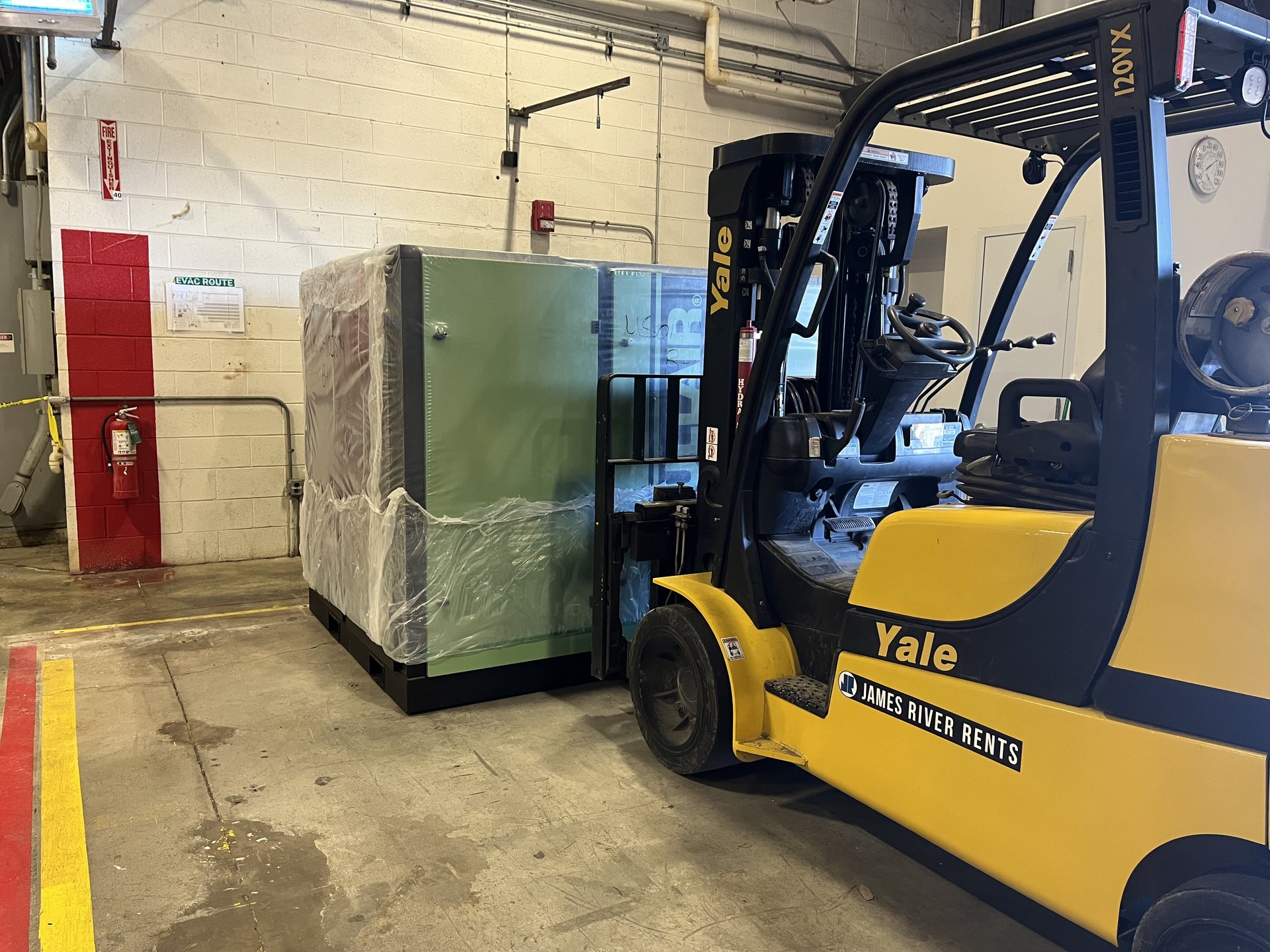
Obsolete machinery gets cut free of its anchors, conduit, piping, and supports, then broken down to pieces that clear the doors and aisles on the actual route out. Torch work and rigging run as one scope on one mobilization, so the slings, chain falls, and forklift are already staged when the last anchor lets go.
Pads and foundations out of the floor
Old equipment pads, housekeeping pads, and footings get broken out and hauled clear, with the replacement pour handled under our concrete work.
Steel, rack, and platform teardown
Mezzanines, access platforms, handrail, guardrail, conveyor frames, and pallet rack come out in pieces sized to fit through the doors and aisles you actually have.
Openings and slab cuts
Trenches, floor penetrations, and wall openings for new pipe, conduit, and drain runs, cut so the surrounding slab and structure stay intact.
Working in your building
Demolition around a live production schedule
The fire watch is the part of a demolition job people underestimate. Cutting steel throws slag into cable tray, insulation, and floor joints nobody thought to look at, so the watch stays on the area after the last cut instead of ending with it. Stored energy gets isolated and verified to your procedure before a torch comes off the truck, and anything overhead gets the floor beneath it cleared and controlled before the first sling goes on. Your procedures run the job. We work to them rather than asking you to work around ours.
Containment is the other half of it. In a food plant or a data hall, demolition dust is a bigger problem than demolition noise. Poly barriers, wet cutting, and vacuum attachments keep the debris in the work area instead of in your product or your air handlers. Housekeeping is not a courtesy on a plant job. If we leave a mess, your people cannot work, and the line does not start back up on time.
We also field verify before we quote. Under a machine that has been anchored down for 30 years, the bolt pattern, the conduit routing, and the pad depth are almost never what the file shows, and on a removal that gap is the whole schedule. A footing that turns out to be 18 inches thick with a rebar mat in it is a different day of work than a 6 inch slab. Walking it first is what keeps a two day removal from turning into a five day one.
How we work
How a removal runs
Site walkthrough
We walk the equipment, the route out of the building, the door and aisle clearances, and what is above and below the work area.
Scope and schedule
You get the scope in writing with what is being removed, what is being left, what we need isolated, and the window we need on your floor.
Isolation and permits
Energy sources are isolated and verified to your procedure, containment goes up, and the hot work paperwork is pulled before anything gets cut.
Remove, clear, and hand back
Equipment is cut loose and rigged out, concrete and steel are broken down and staged, and the area is cleared so the next trade can start.
Frequently Asked Questions
- Do you take down buildings?
No. Our demolition work is selective and interior. Equipment removal, pads and foundations, steel and rack teardown, and openings for new work inside a facility that stays standing.
- Can you pull a machine out with the line beside it still producing?
In most cases, yes. It changes how the area gets contained and how the debris moves out, and the loud, dusty, and hot work pieces usually get scheduled into a shift change, a weekend, or a planned shutdown window. Where a cut cannot be contained well enough, we say so at the walkthrough instead of finding out on the floor.
- Do you handle the rigging and the concrete too, or just the demolition?
All of it. The same contractor cuts the machine loose, rigs it out, breaks out the old pad, and can pour the new one and fabricate the steel that sits on it. See rigging services and concrete work for those scopes.
- What do you need to see before you can quote a removal?
A walkthrough is the fastest path. If that is not practical yet, photos of the equipment and its base, the route out of the building, door and aisle dimensions, and anything you know about what is anchored or buried under it will get us most of the way there.
- What happens to the old equipment and the debris?
That is part of the scope conversation. Some plants want the machine crated and staged for resale, some want it scrapped, and some want it cut down and set at a specific dock. Tell us which and it gets built into the plan.
Get it moving
Tell us what needs to come out
Send the photos and the dimensions, or set up a walkthrough and we will look at it in person. Removals run out of our Middletown shop, and the full service area reaches up into the Loudoun County data center corridor. Phones are answered Monday through Friday, 7:00 AM to 3:00 PM. Related work: industrial maintenance and welding and fabrication.