Middletown, VA
Concrete Contractorin Middletown, VA
Virginia Welding & Fabrication is a concrete contractor in Middletown, VA that pours the concrete industrial equipment sits on. Equipment pads, housekeeping pads, footers, curbs, and anchor bolt layouts for machines going into plants, warehouses, and mechanical rooms across the Shenandoah Valley.
Almost all of our concrete work exists because a machine is coming in or going out. The old pad gets broken out, the new one gets formed to the equipment layout, and the same crew rigs the machine onto it and grouts it down. Call (540) 931-1331, Monday through Friday, 7:00 AM to 3:00 PM.
What we do
Industrial concrete work, not driveways
A pad is not just a slab. It is sized for the weight of the machine, reinforced for how that machine loads it, and laid out from the anchor bolt pattern on the equipment drawing. Miss the layout by half an inch and the base plate does not drop over the bolts, which you find out with the rigging crew standing there.
We build to the drawings you already have and field verify before anything gets formed. On a pad the things that move the form line are the ones nobody drew: a floor drain sitting two feet off, a conduit run buried under the slab, a column base eating the corner of the footprint, or an existing pad that is four inches thicker than the record says.
- Equipment pads sized and reinforced for the machine going on them
- Housekeeping pads with formed edges in mechanical, electrical, and washdown areas
- Footers under columns, racks, and support steel
- Slab patching and infill after a machine or a pad comes out
- Cast in place anchor bolts set to a template, plus post installed wedge and epoxy anchors
- Grout pockets, base plate grouting, and precision leveling
- Curbs, bollard bases, and forklift protection at the edge of a pad
- Control, isolation, and saw cut joints so the slab cracks where you put the joint
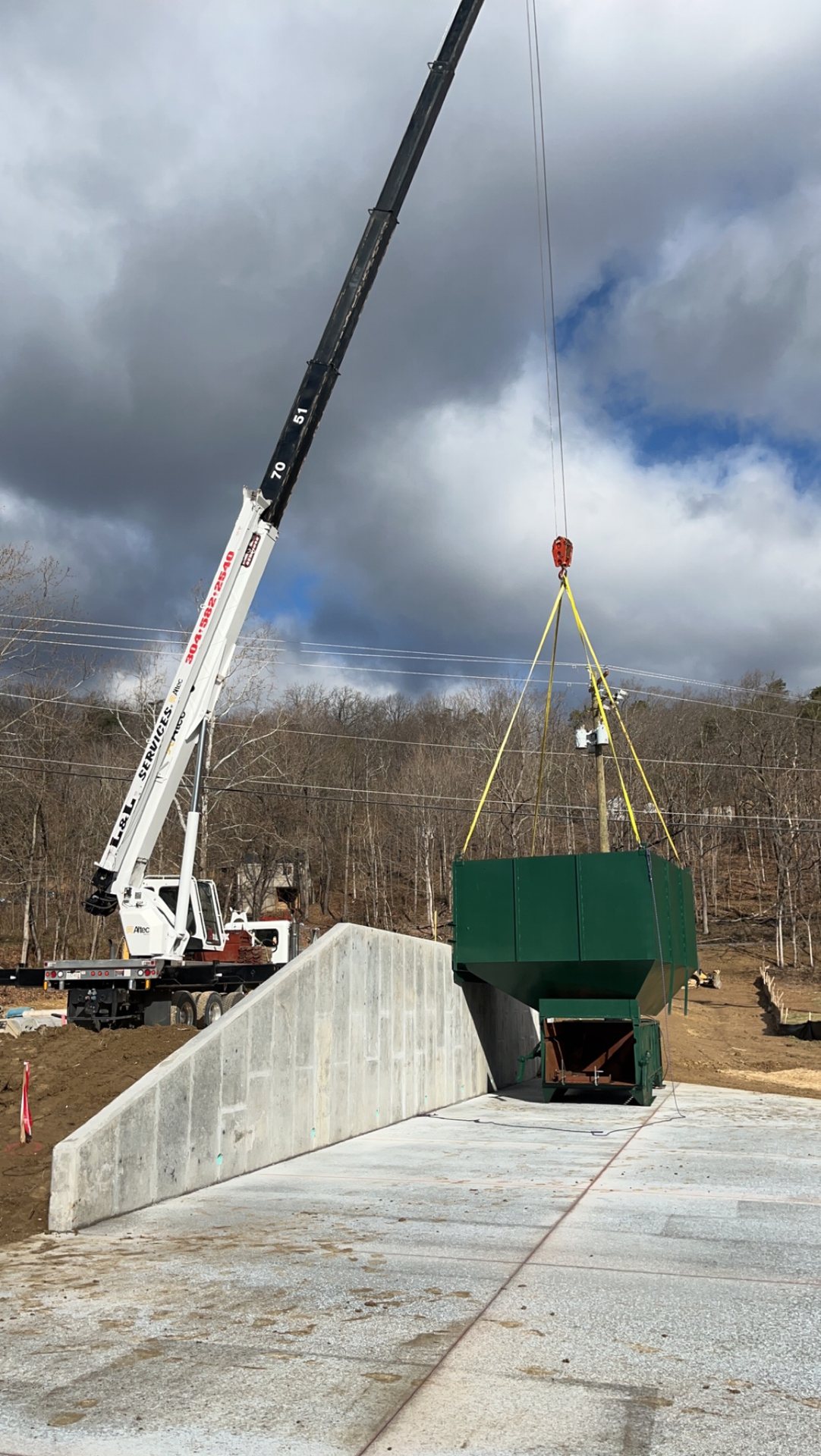
Scope
The pours we get called for
Equipment pads
A compressor, press, tank, conveyor drive, or compactor needs a pad that carries static weight and dynamic load. We pour to the footprint on the equipment drawing, set anchor bolts to a template, and leave grout pockets where the base plate needs them.
Housekeeping pads
The raised pad under equipment in a mechanical room, electrical room, or food plant. It keeps the machine base out of washdown water, defines the footprint so forklifts stay off it, and gives you solid material to anchor into.
Footers and foundations
Widened bases under columns, mezzanine posts, rack uprights, and support steel that spread load into the soil or the slab. Poured below frost depth where they need to be, with the anchor pattern laid out from the steel.
Pad removal and repour
The old machine leaves and its foundation is still in the floor in the wrong footprint. We break out the old pad, haul the debris clear of the work area, and pour the new one to fit the machine actually going in.
Slab repair and patching
Trench backfill, spalled areas at dock doors and drive aisles, holes left by removed anchors, and infill where a pad used to be. Cut back to sound concrete, doweled where it needs to be, finished to match the traffic over it.
Curbs, bollards, and protection
Formed curbs at the edge of a pad and concrete bases for steel bollards and guard posts. We fabricate the steel too, so the bollard and its base get set on one trip by one crew.
The handoff
Anchor bolts, grout, and getting the machine to sit right
The pour is the easy part. What determines whether the machine is still running in five years is the anchor layout, the shimming, and the grout. Anchor bolt layout has to match the machine, not the drawing of the machine, so we measure the base plate before anything gets set in a pour.
Cast in place anchors get held in a template so the pattern holds while the concrete sets. In cured slab we drill and set wedge or epoxy anchors to the embedment depth and edge distance the anchor calls for. Once the machine lands it gets shimmed level, soft foot gets corrected before torque, and the base plate gets grouted so load transfers into the pad instead of riding on four shims.
- Base plates measured in the field before the anchor pattern is set
- Cast in place anchor bolts held to a template through the pour
- Post installed wedge and epoxy anchors in cured slab
- Shimming, soft foot correction, and leveling before torque
- Cementitious and epoxy grout under base plates and sole plates
- Coordination with the steel we fabricate for the same job
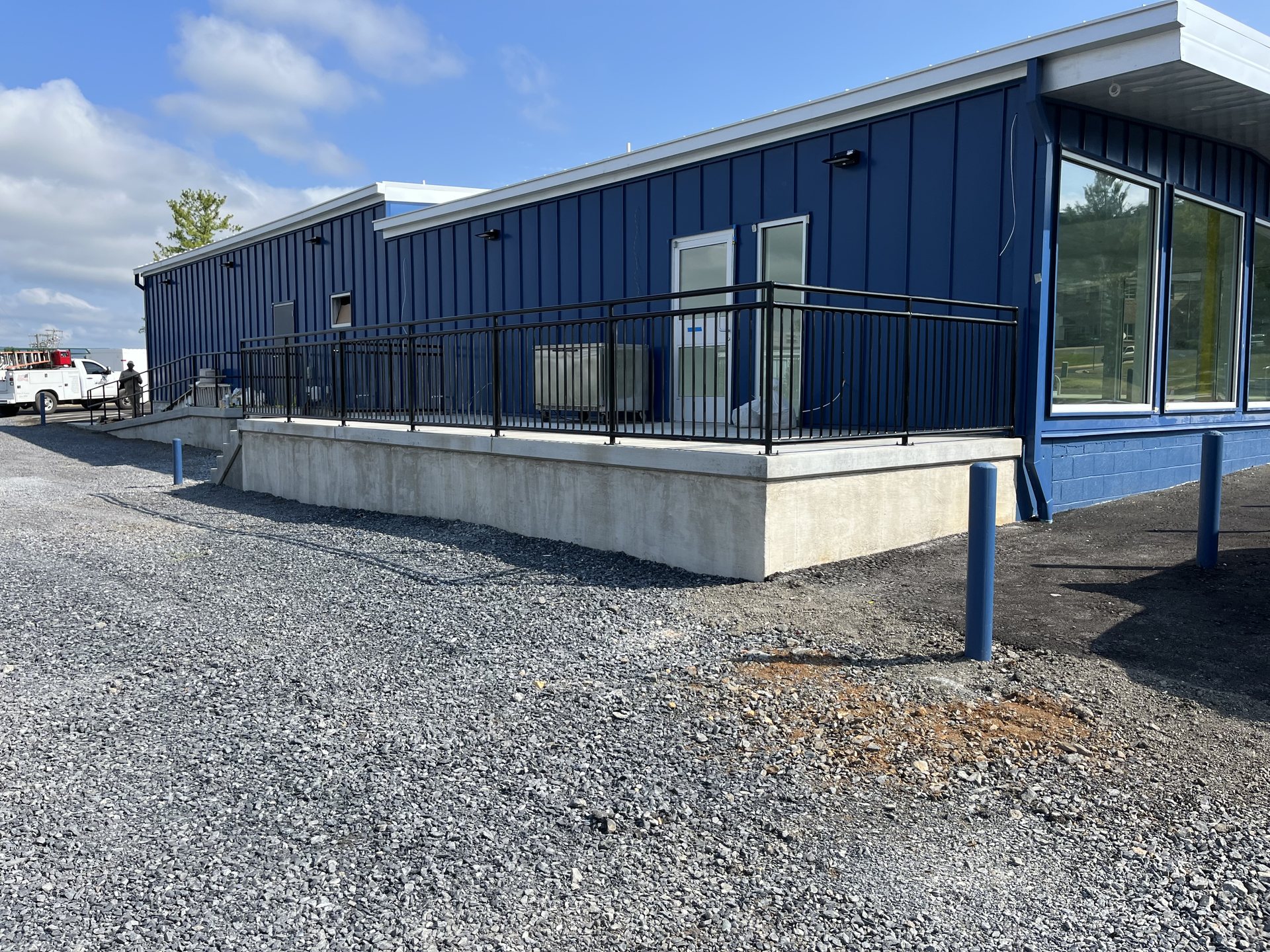
How it works
How a concrete job runs here
Site walk and field verify
We measure what is actually there. Existing pad, slab thickness, drains, conduit, and how a mixer or buggy reaches the work.
Scope and quote
You get the concrete work, the demolition of anything coming out, the rigging if the machine set is part of it, and the lead time, quoted off your equipment drawing.
Schedule around production
Forms, rebar, and the anchor template get built and staged before your shutdown window opens, so the window gets spent breaking out, pouring, and curing. Contractor orientation and the access route for the mixer are settled before the first truck shows up.
Pour, set, and clean up
Joints get cut where they belong and the pad cures before anything loads it. Then the machine gets rigged in, shimmed, and grouted, and the area gets swept clear.
Service area
Concrete work out of the Middletown shop
We run concrete work out of our 5,000 square foot shop in Middletown, VA, and most of it lands close enough that forms and rebar arrive the same morning the crew does. Winchester distribution and cold storage buildings are the most frequent destination. The full list of towns and counties we cover is on our service area page.
Concrete is rarely the only thing we are doing on a plant job. It usually sits between the demolition that takes the old unit out and the rigging that sets the new one. The crew that forms the pad is the crew that lands the machine on it, which is most of what there is to know about Virginia Welding & Fabrication. Tell us the machine and the location on your quote request and we will scope the sequence as one job.
Related services
Trades that run with the concrete
Rigging Services
The pad and the machine that goes on it are one purchase order. The old unit comes out and the new one lands on concrete we poured to its footprint.
Demolition
Selective interior demolition, pad removal, and equipment decommissioning inside a facility that is still running.
Industrial Maintenance
Compressor installs, conveyor work, guarding, pipe and duct support, and the repairs that come up between shutdowns.
Frequently Asked Questions
- Can you pour a pad while the plant is running?
Usually, yes. Most equipment pad work stays inside a contained area, so production around it keeps going. We plan the access route, the containment, and the cut and pour sequence with your maintenance lead first. Anything that needs cutting runs under your hot work permit, and equipment we are forming against gets locked out before the saw comes out.
- Do you set anchor bolts to our equipment drawing?
Yes. Send the drawing with base plate dimensions and the anchor pattern and we lay the template out from it. If the machine is already on site we measure the actual base plate instead, because what shows up does not always match what was sent.
- What is a housekeeping pad and do we need one?
It is the raised concrete pad under a machine, typically a few inches above finished floor with a formed edge. It keeps the equipment base out of washdown and mop water, which is the difference between a base plate that lasts and one that rusts at the floor line. Standard in food plants, mechanical rooms, and electrical rooms.
- Do you do the concrete and the equipment set, or only the concrete?
Both. We break out the old pad, form and pour the new one, set the anchors, rig the machine in, shim it, and grout the base, so no trade is standing around waiting on another to show up. Concrete only is fine too.
- How long before we can put the machine on a new pad?
That is set by the mix, the reinforcement, and how the machine loads the pad. We tell you what the pour needs before anything goes on it and schedule the set around that time. Rushing a machine onto green concrete is how you end up pouring the pad twice.
- What drives the lead time on a pad?
Three things, usually. How long the anchor template and rebar take to build, whether the old pad has to come out first, and the cure time before the machine can load it. Tell us the date the machine has to be running and we will work the schedule backward from it. This is commercial and industrial work only. Residential slabs, driveways, and sidewalks are not what we do.
Get it moving
Tell us what machine is going in
Send the equipment drawing, the location, and the date it needs to be running, and we will scope the pad, the anchors, and the set together. Monday through Friday, 7:00 AM to 3:00 PM.